Advanced ceramics are prized for their ability to endure environments that would destroy most metals and polymers. However, the performance of a high-purity ceramic component is often limited by its microstructure. That’s why in precision manufacturing, the method used to form the material is just as important as the chemistry of the powder itself.
Weiterlesen: What Problems Does Isostatic Pressing Solve In Ceramic Components?
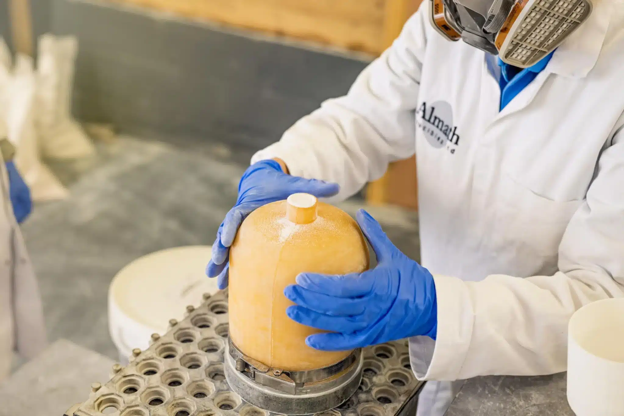
One of the most effective solutions to these challenges is isostatic pressing. While traditional uniaxial pressing applies force from a single direction, this technique uses fluid pressure to compress the material from all sides simultaneously. This process is used to overcome a key inherent physical limitation of standard forming techniques. By applying pressure uniformly, it’s possible to produce components that are more reliable and capable of surviving the most demanding conditions.
Reducing Porosity And Eliminating Critical Pores
The most immediate problem solved by isostatic pressing ceramic materials is the presence of internal voids. In high-temperature applications, porosity is often the catalyst for failure.
When ceramic powder is compressed isostatically, the multidirectional force eliminates these critical pores more effectively than mechanical dies. This results in:
- Higher Density: A more compact grain structure that resists chemical infiltration.
- Elimination of Voids: Removing the internal voids that act as a starting point for cracks.
- Enhanced Reliability: Components that maintain their structural integrity under more demanding conditions..
Improving Material Consistency And Predictability
In ceramic engineering, consistency is a requirement, not a luxury. Standard pressing methods often suffer from pressure gradients, where the material closest to the punch is denser than the material at the centre of the part. This uneven density leads to differential shrinkage during the firing process.
Differential shrinkage is a major cause of residual stress. If one part of a crucible shrinks more than another, it can warp or develop internal stresses that are invisible to the eye but fatal in operation. Using isostatic pressed ceramics significantly reduces this issue.
Because the pressure is applied evenly, the density is uniform throughout the entire part. This predictable behaviour allows us to achieve tighter tolerances and ensures that every component performs exactly like the last.
Minimising Defects And The Risk Of Failure
Internal flaws are the silent killers of technical ceramics. Weak points or micro-cracks created during the forming stage can expand rapidly when the part is placed into service.
The uniform compaction achieved through an isostatic pressing ceramic process significantly reduces the risk of these internal flaws. By removing the mechanical friction associated with rigid metal dies, we eliminate the uneven stress distributions that cause laminations and capping defects.
For our customers in the aerospace, semiconductor and other critical industries, this reduction in risk is vital. A component with fewer internal flaws is a component with a much longer service life and a lower probability of catastrophic failure in the field.
Quality Assurance In Complex Or Thick Components
As a component increases in size or complexity, the difficulty of maintaining uniform properties grows. In a thick-walled alumina block, uniaxial pressing might not compact the centre as much as the outer edges, resulting in different regions of the block shrinking at different rates, causing residual stresses and internal cracking.
Isostatic pressing solves this by ensuring that the pressure penetrates to the very centre of the part, regardless of its thickness. This allows for the production of:
- Large-bore tubes and pipes.
- Heavy-duty crucibles for metal melting.
- Large industrial billets for bespoke machining.
Whether the part is 5mm or 50mm thick, the material properties remain consistent from the surface to the core.
Supporting High-Performance Thermal Shock Resistance
A unique advantage of isostatic pressed ceramics is the ability to engineer thermal shock resistance. For induction melting or rapid heating cycles (exceeding 5 degrees per minute), the ceramic must be able to expand and contract without fracturing.
While pressing usually aims for maximum density, we can tailor the microstructure. We can create components that balance high strength with the specific porosity levels required for thermal shock resistance. This flexibility makes it the ideal choice for applications requiring rapid heating such as induction melting.
At Almath, we use isostatic pressing to produce both fully dense and thermal shock resistant ceramic components depending on the application requirements.
Flexibility Through Green Machining And Billets
Perhaps the most practical problem solved by this method is the limitation of shape. Rigid dies are restricted by tooling geometry, meaning complex undercuts, re-entrant features, and intricate internal shapes can be difficult or impossible to press directly.
To solve this, we can press powder into a billet or a near net shape of the component. These billets are then subjected to green machining, where the unfired ceramic is shaped using standard machining techniques. This process allows us to:
- Create Intricate Geometries: Shapes that would be impossible to press directly.
- Produce One-Off Prototypes: Avoiding the high cost of custom tooling.
- Achieve Precision Features: Threads, bores, and complex profiles.
Once the machining is complete, the part is fired to its final hardness, resulting in a complex component with all the structural benefits of a pressed material.
Why Choose Almath For Your Pressed Ceramics?
Navigating the technical requirements of advanced ceramics requires more than just a furnace. It requires a deep understanding of how forming pressures, powder chemistry, and firing cycles interact.
At Almath Schmelztiegel, we specialise in identifying the correct manufacturing route for your specific problem. Whether you are dealing with premature part failure or looking to scale up a complex design, our team provides technically informed solutions that prioritise reliability and performance.
Kontakt
Are you looking to improve the lifespan of your ceramic components? Our team is ready to help you navigate the benefits of isostatic pressing and find the right material for your application. Get in touch with Almath Crucibles today to discuss your project and discover how our advanced manufacturing capabilities can support your growth.



 English (UK)
  Français
  Deutsch
  Español
  Italiano
  Polski