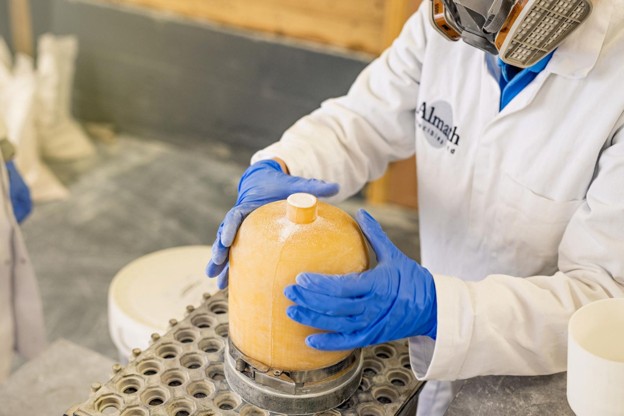
One of the most common questions we receive is why certain ceramic components are manufactured using cold isostatic pressing, rather than traditional forming methods. The answer depends on the component geometry, production volume, material properties, and performance requirements of the finished part.
Leer más: 5 Advantages Of Cold Isostatic Pressing For Ceramic Components
Cold isostatic pressing allows ceramic powders to be compressed uniformly from every direction, producing highly consistent components with excellent strength, dimensional stability, and design flexibility. Below, we explore five key advantages of this manufacturing process and when it is most commonly used.
1. Superior Density And Strength
At Almath, we often recommend cold isostatic pressing where customers require highly uniform ceramic components with minimal distortion after firing. Uniform compaction produces more consistent shrinkage during sintering, helping to improve dimensional accuracy and long-term component reliability.
The primary benefit of manufacturing a pressed ceramics component through isostatic processing is the achievement of highly uniform green density. In traditional uniaxial pressing, friction between the ceramic powder and the rigid steel die creates a pressure gradient. This variation results in uneven density throughout the unfired part. When the component undergoes high-temperature sintering, these density variations cause uneven shrinkage, warping, or internal stress.
Using cold isostatic pressing for ceramics eliminates these localised pressure variations entirely. Because the powder is compressed uniformly by a liquid medium, the resulting component exhibits perfectly balanced density. This structural equilibrium significantly reduces differential shrinkage during the firing stage. Furthermore, eliminating localised compaction gradients dramatically lowers the probability of critical structural flaws. A more uniform microstructure helps reduce the microscopic structural defects that can lead to mechanical failure under operational stress.
2. Enhanced Geometric Flexibility
When selecting a manufacturing method, engineers often compare traditional slip casting with advanced pressed ceramics. While slip casting is effective for thin-walled vessels, it struggles to produce large, solid structural blocks or components with highly variable wall thicknesses.
- Variable Wall Thicknesses: Isostatic processing allows for the production of components with thick walls that would otherwise crack or deform during traditional drying cycles.
- Complex Configurations: The process accommodates designs where the interior shape differs completely from the exterior profile, allowing internal contours that mechanical top-and-bottom dies cannot form.
- Expanded Component Scale: Manufacturers can produce significantly larger industrial components, unlocking new possibilities for large-scale furnace linings and heavy-duty wear parts.
This geometric freedom makes cold isostatic pressing particularly suitable for bespoke ceramic components where conventional forming methods would struggle to achieve the required geometry.
3. Cost-Effective Production
For many procurement managers, the initial investment in tooling can seem prohibitive. To properly evaluate the economics of production, it helps to understand the fundamental difference between hot and cold isostatic pressing regarding equipment and cycle times.
Hot isostatic pressing (HIPping) applies pressure at sintering temperatures to provide an additional driving force that eliminates remaining porosity and defects. In most commercial cases the components are pressed initially to form them and then additional densification occurs in a pressurised and heated chamber. These systems require complex engineering, higher energy costs, and the costs associated with an additional process. By comparison, cold isostatic pressing occurs at room temperature and only conventional oxide kilns are used, without the addition of HIPping. While hot systems require expensive internal heating elements and specialised gas management, cold processing utilises liquid at ambient temperatures, reducing operational complexity.
The cold method streamlines the manufacturing timeline by enabling rapid production. Unlike slip casting, there is no lengthy crucible or mould drying phase required before firing. The powdered material is packed, compressed, and removed from the tooling ready for immediate green machining or sintering.
Although cold isostatic pressing requires more specialised tooling than basic pressing methods, the investment quickly becomes cost-effective for repeat production runs. This is particularly true where multiple identical ceramic components are required, allowing tooling costs to be spread across larger quantities while maintaining excellent consistency.
4. Improved Material Properties
Beyond geometric and economic factors, components manufactured via cold isostatic pressing for ceramics display superior working characteristics in the field. Minimising the internal voids and structural variations, and increasing the reliability of components.
Industrial customers frequently report improved chemical resistance when transitioning to isostatic components. This enhanced performance is likely due to a significant reduction in surface porosity, which prevents corrosive gases or molten slags from penetrating.
Additionally, this flexible pressing methodology expands your material options. It allows engineers to manufacture thermal shock-resistant grades as well as fully dense variants from the same base material group. By adjusting the powder preparation and compaction cycles, the final properties can be tailored to specific industrial duties.
5. Versatility In Critical Applications
The combination of geometric freedom and enhanced material integrity ensures that these advanced pressed ceramics find use across a diverse range of high-tech sectors.
The method is routinely specified for components destined for semiconductor manufacturing equipment, aerospace insulation, and advanced chemical reactors. Whether an application requires an intricate custom insulator or a heavy-duty processing crucible, the physical reliability of an isostatically compacted component ensures stable, long-term performance where standard forming methods fail.
At Almath, cold isostatic pressing is regularly used to manufacture custom crucibles, technical ceramic components, electrical insulators, and other bespoke parts where uniform density and reliable performance are essential.
Comparing Cold And Hot Isostatic Pressing
To help specify your next engineering project, the core operational differences between the primary densification methodologies are outlined below:
- Uniaxial Pressing: Limited to simple, shallow geometries due to single-axis pressure. It can achieve high production rates but is prone to density gradients at higher aspect ratio designs.
- Cold Isostatic Pressing: Utilises ambient fluid pressure for complex, large, and uniformly dense components with low tooling overheads for mid-range volumes.
- Hot Isostatic Pressing: Combines extreme heat and gas pressure simultaneously; highly specialised and reserved for removing trace porosity in ultra-critical components.
Understanding the difference between hot and cold isostatic pressing helps ensure the most appropriate manufacturing method is selected for each application. For the vast majority of demanding ceramic components, cold isostatic pressing offers an excellent balance of strength, dimensional consistency, and manufacturing flexibility.
Consulte con Almath Crucibles cuáles son sus necesidades
Every ceramic component has different manufacturing requirements. Our technical team works closely with customers to determine whether cold isostatic pressing is the most appropriate production method based on component geometry, material properties, production quantities, and application requirements. Whether you’re developing a new ceramic component or refining an existing design, we can recommend the most suitable manufacturing approach for your project.
Get in touch with our specialist team today to discuss your next project. Whether you need advice on material selection, or want to explore whether cold isostatic pressing is the right manufacturing method for your component, our team is here to help.



 English (UK)
  Français
  Deutsch
  Español
  Italiano
  Polski