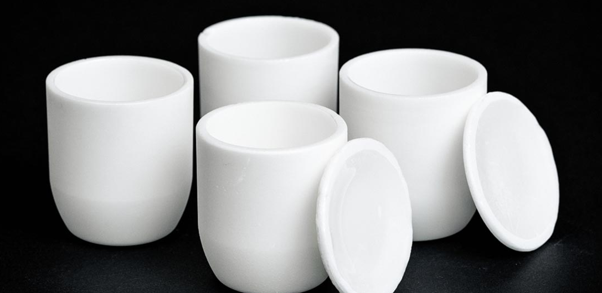
When selecting a crucible for extreme temperatures or highly reactive materials, choosing the wrong ceramic can lead to premature failure, contamination, or unnecessary cost. While alumina remains the industry standard for many applications, some processes demand the exceptional thermal and chemical performance of zirconia crucibles.
Dowiedz się więcej: When Should You Use Zirconia Crucibles (And When You Shouldn’t)
From high-temperature melting and refining to applications involving acidic slags and reactive materials, zirconia ceramic offers capabilities that other technical ceramics cannot easily match. However, its premium performance comes at a higher cost, making it important to understand when zirconia is the right choice and when an alternative material may be more appropriate.
At Almath Crucibles, we manufacture high-purity zirconia crucibles tailored to specific thermal, chemical, and process requirements. This guide explains the different zirconia grades available and helps identify the applications where zirconia delivers the greatest value.
What Is Zirconia And How Is It Stabilised?
Pure zirconium dioxide undergoes structural phase transitions when heated, expanding and contracting in ways that can cause cracking during cooling cycles. To counteract this behavior, the material must be blended with stabilising oxides such as yttrium oxide (yttria) or calcium oxide (lime).
These chemical additions alter the crystal microstructure, producing variants with distinct engineering advantages. Almath Crucibles offers both calcia-stabilised and yttria-stabilised options, tailored to your specific application:
- 3Y (3% Yttria-Stabilised Zirconia / TZP): Tetragonal Zirconia Polycrystal represents a high-strength configuration. It offers exceptional mechanical toughness and wear resistance at moderate to high temperatures, making it ideal for structural applications where physical degradation is a primary concern.
- 5Y (5% Yttria-Stabilised Zirconia / PSZ): Partially Stabilised Zirconia provides the highest thermal shock resistance among the yttria variants. Its blended microstructure actively arrests microcrack propagation, allowing the material to endure rapid heating and cooling cycles.
- 8Y (8% Yttria-Stabilised Zirconia / FSZ): Fully Stabilised Zirconia features a stable cubic structure optimised for the highest temperature thresholds. It maintains excellent structural integrity well beyond the limits of other technical ceramics.
At Almath, one of the most common questions we receive is which zirconia grade is most suitable for a particular process. The answer depends on the balance between operating temperature, thermal shock resistance, chemical exposure, and cost. Different stabilisation systems offer different advantages, which is why selecting the correct zirconia grade is just as important as selecting zirconia itself.
When Operating At Extremely High Temperatures
The most compelling reason to select a zirconia crucible is an operational temperature requirement that surpasses the melting points of standard refractory ceramics. While high-purity alumina performs reliably up to 1700°C, zirconia options routinely operate in environments reaching up to 2200°C and sometimes higher depending on the specific stabiliser configuration.
This extreme thermal ceiling makes the material invaluable for melting precious metals, superalloys and advanced synthetic minerals. When your process requires absolute dimensional stability at temperatures where alternative materials soften, sag or recrystallise, investing in a specialised zirconia ceramic component becomes an operational necessity.
When Thermal Shock Resistance Is Critical
Rapid thermal cycling introduces intense mechanical stress within ceramic bodies. Standard refractory vessels often crack under the strain of rapid temperature differentials. If your manufacturing process involves induction heating, fast-firing kilns or sudden quenching cycles, selecting the correct material variant is vital.
Using a 5Y partially stabilised configuration allows the vessel to absorb localised thermal expansion without fracturing. The microstructural phase changes within the material actively blunt the energy of advancing cracks, providing the durability needed for aggressive thermal profiling.
When Chemical Resistance And Low Contamination Are Required
Molten metals and chemical slags are notoriously aggressive, frequently eroding standard containment vessels and leaching impurities into the melt. Zirconia exhibits remarkable chemical inertness, particularly when exposed to highly reactive materials or acidic slags.
This resistance makes it highly effective for clean-melting processes in high-end manufacturing, where even part-per-million levels of contamination can ruin a batch of high-purity alloys or semiconductor materials. The low chemical reactivity ensures that the vessel does not bond with or alter the composition of the charge inside.
Avoid When Lower-Cost Materials Can Meet Performance Needs
Despite its exceptional performance characteristics, zirconia is not a universal replacement for all laboratory or industrial processes. It is a premium material that requires specialised raw inputs and complex sintering processes, making it significantly more expensive than standard alumina or silica options.
If your process operates below 1600°C, involves gentle heating rates and handles non-reactive compounds, a high-purity alumina vessel will comfortably meet your performance targets at a fraction of the cost. Zirconia is not as prohibitively expensive as platinum or other noble metal options, but it remains an unnecessary expense for routine, low-stress applications.
Making The Right Selection
To optimise your production efficiency, match the ceramic material directly to your active environmental hazards.
- In practice, we typically recommend zirconia where temperatures exceed 1600°C, where acidic slags are present, or where contamination must be minimised during melting and processing. The material’s exceptional temperature capability, chemical resistance, and thermal shock performance make it the preferred choice for some of the most demanding applications.
- However, zirconia is not always the most economical solution. For lower-temperature processes, gradual heating cycles, or less chemically aggressive environments, materials such as high-purity alumina can often provide excellent performance at a lower cost. Selecting the right material ultimately comes down to balancing performance requirements against process conditions and budget.
Kontakt z nami
Selecting the right material configuration requires balancing thermal demands against chemical and financial realities. At Almath Crucibles, our technical team works closely with industrial partners to specify, design, and manufacture bespoke zirconia crucibles and advanced ceramic solutions. Contact us today to discuss your process parameters and find the ideal vessel for your high-temperature applications.



 English (UK)
  Français
  Deutsch
  Español
  Italiano
  Polski